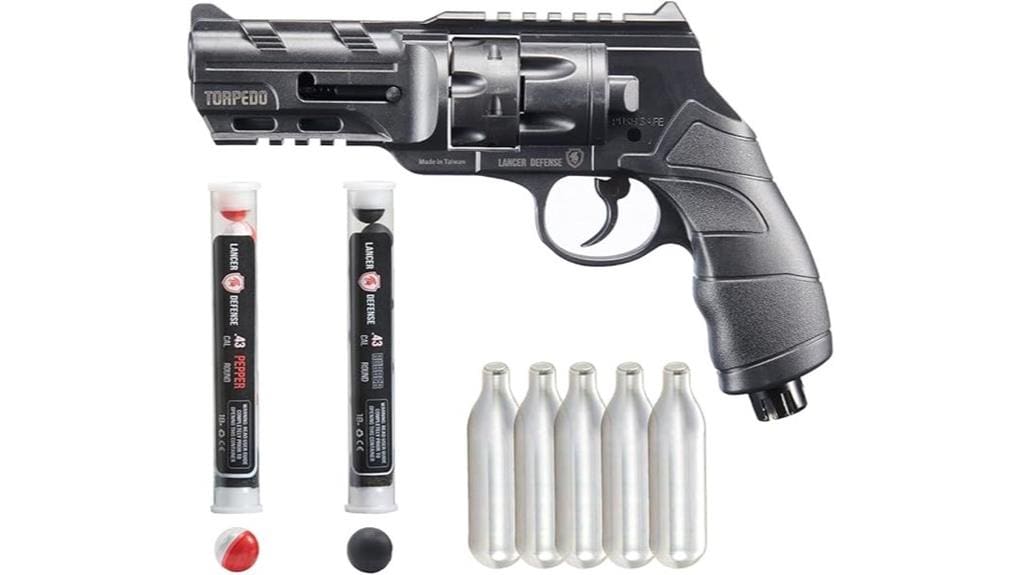
You’ll get a lightweight, CO₂-powered .50-caliber training pistol that’s built for low-recoil deterrence and versatile training. It uses a polymer frame with grip-forward balance, simple controls, and a six-round magazine that accepts rubber, paint, and pepper projectiles without modification. Expect predictable short-range accuracy, easy CO₂ arming, and routine seal maintenance for reliability. It isn’t a lethal substitute and has limited capacity, but keep going and you’ll find more on performance, upkeep, and suitability.
Some Key Takeaways
- Multi-ammo semi-auto accepting .50 rubber, paint/ball, and pepper rounds for versatile training and deterrence.
- Lightweight polymer frame with grip-focused weight distribution offers stable close-quarters handling and low fatigue.
- CO₂-powered, non-blowback system provides consistent velocities, minimal recoil, and quick CO₂ arming via a large screw-knob.
- Six-round magazine limits sustained engagement; reliability depends on O-rings, proper CO₂ seating, and routine maintenance.
- Best for non-lethal home defense, milsim training, and scenario drills where reduced penetration and ammo flexibility matter.
What the Lancer Tactical .50 Cal Pistol Is and Who It’s For
Think of the Lancer Tactical .50 Caliber training pistol as a non-lethal, multi-purpose self‑defense tool designed for users who need a controllable deterrent without resorting to live firearms. You’ll view it as a home defense option and a versatile training tool that accepts rubber, paint/ball, and pepper projectiles for mission-specific flexibility. You operate it semi‑automatically with CO₂ power for reliable propulsion and minimal recoil. You’ll appreciate its six‑round capacity, quick CO₂ arming, and built‑in sights for rapid target acquisition. It’s aimed at people seeking effective, nonlethal means to protect personal freedom and secure living spaces. It also pairs well with Ninja paintball tanks for extended CO₂ supply during extended training sessions.
How It’s Built: Materials, Ergonomics, and Controls
Having established its role and basic function, look next at how the .50 Cal is constructed and how that construction affects handling. You get a high-quality polymer frame that keeps mass low while maintaining rigidity; weight distribution favors the grip for stable presentation. Grip texture is pronounced, aiding control during stress. Surface finish resists wear and eases maintenance without glare. Controls are minimal and logical: accessible manual safety, large CO₂ screw-knob, and clear magazine release. Trigger reach suits average hands with predictable reset. The design prioritizes reliable manipulation and rapid readiness, aligning with a user intent on self-determination. Lightweight construction also benefits maneuverability in close-quarters scenarios, a design choice common to lightweight paintball markers.
Ammunition Compatibility and On-Target Performance
While the .50 Cal is built as a non-lethal option, it accepts multiple projectile types—.50 rubber balls, paint/ball rounds, and pepper projectiles—so you can tailor effects to mission needs. You’ll load and switch ammo easily; magazines accept all listed rounds without modification. On-target performance varies: rubber accuracy is adequate at close range for center-mass hits, paint rounds show similar ballistic arcs, pepper rounds maximize immediate compliance. Expect reduced penetration versus lethal calibers; controlled penetration testing confirms superficial impact depth on composite barriers. Use appropriate round selection for proportional response, prioritizing accuracy drills and legal constraints in every engagement. Gear up for precision with First Strike Paintball essentials to match ammo choice to mission objectives.
Operation, Reliability, and CO₂ Handling in Real Use
When you field the Lancer Tactical .50, its non-blowback design and simplified CO₂ interface make operation straightforward: the large screw-knob arms cartridges quickly and reliably, directing most gas into projectile propulsion for consistent velocities and low felt recoil. You cycle rounds with a positive slide lock engagement and clear tactile feedback; the manual safety is unambiguous. Reliability in use is solid if you maintain seals and avoid over-tightening the CO₂ screw. Inspect O-rings for wear to prevent gas leak issues. Routine cleaning and correct cartridge seating keep operation predictable, empowering you to train and defend with confidence. For safe handling and long-term reliability, always use proper CO₂ tank maintenance practices and essential gear.
Decide Now: Pros, Cons, and When to Buy This Revolver
If you’re weighing a non-lethal option, the Lancer Tactical .50 gives clear trade-offs: its multi-ammo capability, lightweight polymer frame, quick CO₂ arming, and low recoil make it a practical choice for home defense and training, but the six-round capacity, reliance on CO₂ seals, and lower stopping power compared with lethal options limit its utility to specific scenarios. You should buy it if you need adaptable, low-recoil deterrence, value durability and simple CO₂ maintenance, and accept reload limitations. Check legal considerations in your jurisdiction, plan secure storage solutions, and pair with scenario-based training to maximize effectiveness. This pistol is well-suited for players who prefer a milsim paintball approach and realistic training drills.
Some Questions Answered
Does It Come With a Holster or Carrying Case?
No, it doesn’t include a holster; the package doesn’t include holster? You get the pistol, ammo, and CO₂ canisters but no dedicated portable storage or carrying case. You’ll need to secure transport safety yourself with an aftermarket holster or lockable case that fits the revolver and accessories. Choose a rigid, lockable carrier with padding and retention to protect the unit, prevent accidental discharge, and comply with local transport regulations for non-lethal arms.
Is It Legal to Own in All States/Countries?
No — you won’t find universal legality. Legal restrictions vary by state and country; some jurisdictions treat .50 cal training pistols as firearms or prohibited projectors, others allow non-lethal devices with registration or age limits. You’ll need to check international regulations and local statutes before purchase or transport. Consult official law texts or a lawyer, and don’t assume freedom to own or carry without confirming permits, import rules, or prohibited-weapons classifications.
Can It Be Safely Used for Close-Quarters Training Indoors?
Yes — you can safely use it for close-quarters training indoors if you follow strict indoor safety protocols and control recoil management. You’ll make certain adequate backstop, ventilation for CO₂ and propellant residues, hearing and eye protection, and clear separation of live and training zones. Use appropriate ammo (rubber/pepper), maintain distance rules, and train de-escalation. Regularly inspect the pistol and magazine to prevent malfunctions and unintended discharge.
Are Spare Magazines and Parts Readily Available?
Yes — spare magazines and parts are generally obtainable. You’ll find magazines, aftermarket grips, and custom springs through specialty retailers and online marketplaces; availability varies by region and demand. Expect common wear parts (springs, seals, CO₂ screws) to be stocked, while proprietary components may take longer. You’ll want to source quality replacements to preserve reliability and your autonomy in maintenance, keeping spares on hand for uninterrupted training or defense readiness.
What Warranty or Manufacturer Support Is Offered?
You get a limited warranty covering manufacturing defects for a defined period; check the paperwork for exact terms and exclusions. You can contact technical support for troubleshooting, warranty claims, and authorized repair guidance. Keep your receipt and serial information, and follow stated maintenance to avoid voiding coverage. If support is delayed, escalate through the dealer or manufacturer channels. Preserve documentation to assert your rights and maintain operational freedom.


