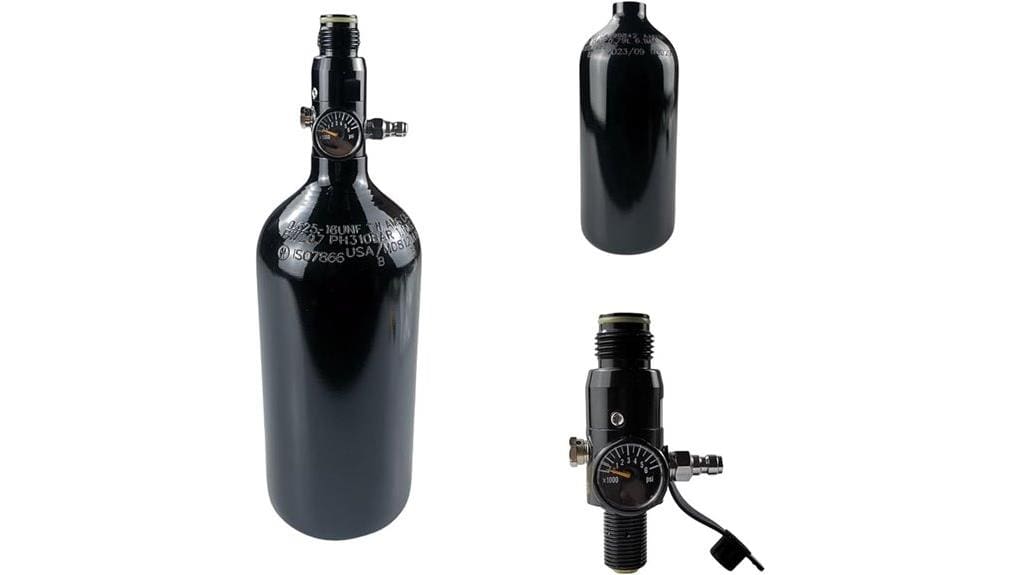
You’ll get a compact, predictable 48 ci/3000 psi aluminum bottle that’s built for short, mobile paintball sessions and regulated to ~800 psi output for consistent shots. It’s lightweight (0.29 kg), uses a 5/8-18UNF neck with a G1/2-14 regulator outlet, and meets ISO/TPED, DOT, and CE standards. Expect limited shot counts but fast refills, minimal single-shot lag, and possible regulator strain on strings. Keep an eye on threading and test intervals if you want full system guidance.
Some Key Takeaways
- 48/3000 tanks are compact 0.21 L cylinders designed for 3000 psi fills with an 800 psi regulated output for predictable shots.
- Best suited for players prioritizing light weight, portability, and brief play sessions rather than long match endurance.
- Expect limited shot count per fill but very fast refill turnaround due to the small cylinder volume.
- Check thread compatibility (5/8-18UNF bottle neck, G1/2-14 regulator outlet) and prefer native fittings to avoid leaks.
- Confirm ISO/TPED, DOT, and CE certifications, follow hydro-test schedules, and inspect valves before installation.
Quick Verdict and Who the 48/3000 Tank Is Best For
Although compact, the 48/3000 Paintball Tank delivers reliable regulated air performance for short sessions; you’ll get a lightweight (0.29 kg), 48 ci (0.21 L) aluminum PCP cylinder rated to 3000 psi input with an 800 psi output regulator. You’ll appreciate its lightweight portability for rapid maneuvers and discreet carriage. Technically, it balances capacity and regulator output for limited runs; you won’t expect marathon fills. If you seek autonomy without encumbrance, this tank grants operational freedom with budget friendly durability—robust alloy construction and certified design. Choose it when you value lean load, predictable pressure, and liberated mobility. Many players pair such tanks with compatible high-pressure systems sold by specialty retailers to ensure fit and safety.
Key Specs and Certifications You Need to Know (Capacity, Pressure, Threads)
When you’re choosing a paintball or PCP airgun tank, focus first on the 48/3000’s core specs: a 0.21 L (48 ci) aluminum cylinder rated for a 3000 psi (207 bar) fill with an 800 psi regulated output, PW 310 bar, and standardized threads (5/8-18UNF bottle mouth, G1/2-14 regulator outlet) — these determine compatibility, runtime, and safe operating limits. You’ll want ISO/TPED, DOT and CE approvals for legal and safety assurance. Check pressure testing records and intervals; don’t accept ambiguous documentation. Thread adapters are available but introduce leak risk and potential noncompliance—prefer native fittings for reliability and freedom from unnecessary constraints. For optimum performance and durability consider investing in premium carbon fiber options from specialized suppliers.
Real-World Performance: Fill Time, Shot Count, and Regulator Behavior
Because the 48/3000 pairs a compact 0.21 L (48 ci) volume with a 3000 psi fill and an 800 psi regulated output, you’ll see very predictable but limited shot counts and fast fills; in practice a full fill delivers a short string of consistent-pressure shots before the regulator drops toward its low-pressure cutoff. You’ll notice rapid fill rate due to small volume — turnaround is minutes. Shot consistency holds through the regulator’s flat-top window, then degrades as burst pressure and internal spring reach shift. Regulator lag is minimal on single shots but can appear during rapid strings. Manage loads to preserve pressure and freedom. Small tanks like these are popular for compact paintball setups because they balance portability with quick refill times.
Compatibility, Installation, and Common Use Cases (Paintball, PCP, Others)
If you plan to mount the 48/3000 on a marker or PCP platform, check thread and pressure compatibility first: the bottle uses a 5/8-18UNF neck and the regulator outlet is G1/2-14, so adapters or matching fittings may be required for some guns and fill stations. You’ll verify thread compatibility and regulator output (800 psi) against your marker or airgun. Consider mounting options: inline grip, remote line, or harness-mounted bottle. For non-paintball uses (aquaculture, soda aeration, clean-energy testing) confirm material compatibility and service cycles. Install with proper seals, torque, and certified fills to preserve safety and operational freedom. Many users mount their tanks on markers sold by Ninja Paintball for reliable fit and performance.
Pros, Cons, Maintenance Tips, and Buying Checklist
Although compact and lightweight, the 48/3000 Paintball Tank System delivers a clear set of advantages and trade-offs you should weigh before buying: it gives 48 ci volume at 3000 psi in a 0.29 kg, 185 mm package with an 800 psi regulated output and standard 5/8-18UNF bottle neck and G1/2-14 regulator outlet, making it easy to mount in tight setups and compatible with many PCP platforms with the right fittings. Pros: high portability, certified safety (ISO/TPED, DOT, CE), durable aluminum. Cons: limited duration per fill, specialized fittings. Maintenance: inspect for valve corrosion, purge and bleed before seasonal storage, pressure-test periodically. Buying checklist: threads, regulator compatibility, certifications, PW. Essential gear for safe paintball tank testing includes a visual inspection kit and a proper pressure gauge to verify safety standards are met and to prevent overpressurization during testing, with emphasis on following hydro testing protocols.
Some Questions Answered
Is the Tank Refillable at Standard Paintball Fill Stations?
Yes — you can refill it at standard paintball fill stations if the station supports its pressure compatibility and you use appropriate refill adapters. You’ll want to confirm the station can handle 3000 psi (207 bar) input and match the bottle mouth thread (5/8-18UNF) or employ a certified adapter for the regulator outlet (G1/2-14). Don’t bypass safety checks; follow ISO/DOT protocols to protect yourself and others.
Can I Transport This Tank on Commercial Flights?
No — you generally can’t transport this onboard commercial flights. Airline policies and TSA restrictions typically prohibit high-pressure PCP tanks unless emptied, certified, and declared; some carriers allow small, completely depressurized cylinders in checked baggage with prior approval. You’ll need written approvals, certification (DOT/ISO/CE helps), and to follow specific carrier packing rules. Check both TSA restrictions and your airline policies beforehand, get documentation, and don’t assume blanket acceptance.
Does the Regulator Require Periodic Recalibration?
Yes — you should recalibrate the regulator periodically. You’ll monitor for pressure drift and inspect for spring fatigue that can shift output from the rated 800 psi. Perform bench checks against a known gauge at regular intervals, replace worn springs or service the regulator per manufacturer intervals, and document results. Staying proactive preserves performance, safety, and your freedom to use the tank reliably without unexpected pressure deviations.
Is There a Warranty or Guaranteed Service Life?
There’s no universal warranty; you’ll get manufacturer-specific warranty terms and a recommended service lifespan. Check your vendor paperwork for coverage length, exclusions, and required maintenance to keep claims valid. Practically, lifespan depends on usage cycles, fill pressure, and inspections—follow ISO/TPED and DOT guidelines, schedule periodic leak and hydro tests, and replace or service the regulator per intervals noted by the maker to preserve safety and claim eligibility.
Are Replacement Regulators or Parts Readily Available?
Yes — you can obtain replacement regulators and parts, but you’ll need to verify aftermarket compatibility and perform pressure testing after installation. You’ll source OEM or compatible regulators via suppliers; threads (5/8-18UNF bottle, G1/2-14 outlet) guide fitment. You should inspect seals, check certifications, and pressure-test to 3000 psi protocols. You’ll keep freedom of choice by preferring certified parts and maintaining rigorous testing and documentation for safe use.


